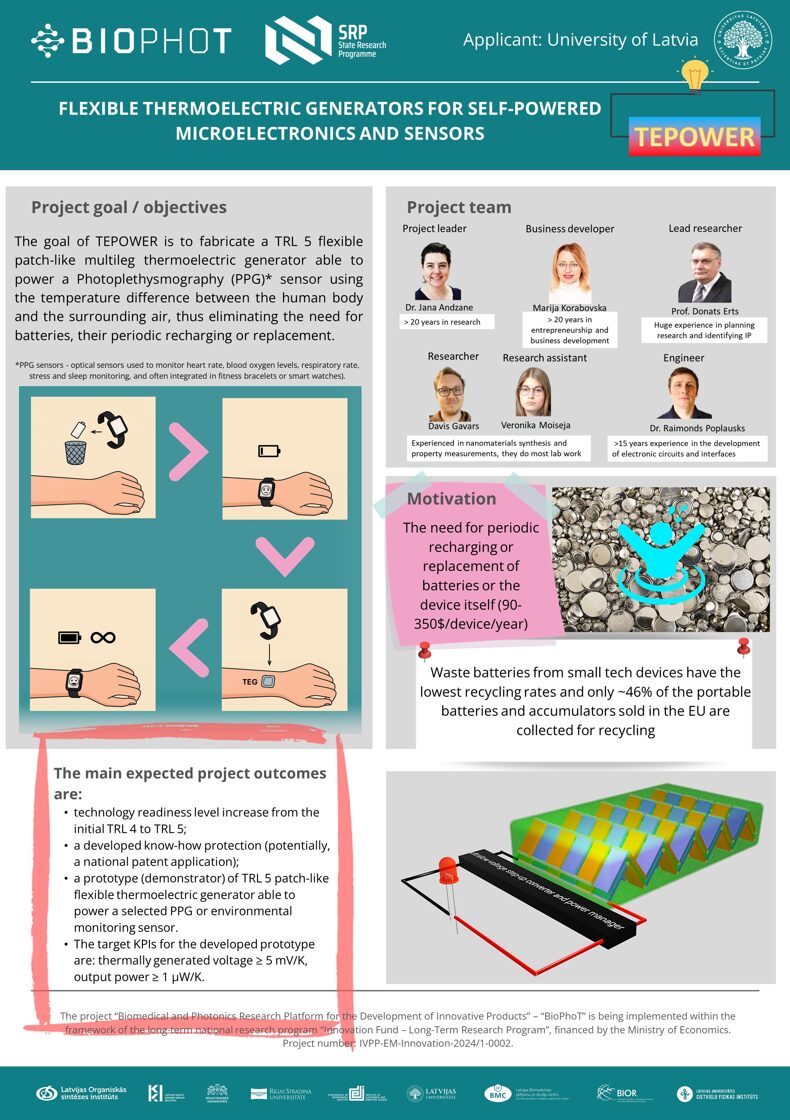
TEPOWER Participates in Hello Tomorrow Global Summit 2026
TEPOWER is proud to participate in the Hello Tomorrow Global Summit 2026 in Amsterdam, one of Europe's leading events dedicated to deep-tech innovation and technology commercialization.
During the event, TEPOWER is presenting its flexible thermoelectric generator technology at the Latvia national booth and sharing its vision of self-powered electronics with the international innovation community.
TEPOWER develops flexible thermoelectric generators that convert body heat into electricity, enabling wearable devices, health monitoring systems, and low-power IoT sensors to operate with reduced reliance on batteries. Our mission is to create sustainable energy solutions that help power the next generation of electronics.
The Hello Tomorrow Global Summit brings together startups, investors, corporations, researchers, and technology leaders from around the world, creating a unique platform for collaboration and business development.
Participation in the event provides TEPOWER with an opportunity to:
Present the technology to international investors and industry leaders;
Explore pilot projects and strategic partnerships;
Validate market needs and commercial opportunities;
Connect with organizations interested in next-generation energy harvesting technologies.
We would like to express our sincere gratitude to LIAA for inviting TEPOWER to join the Latvian delegation and for providing the opportunity to showcase our technology at the Latvia booth.
As TEPOWER continues its journey from laboratory innovation to commercial deployment, events such as Hello Tomorrow play an important role in building international partnerships and accelerating the adoption of sustainable, battery-free energy solutions.
We look forward to meeting new partners and collaborators and continuing to advance our vision:
A world where devices power themselves.
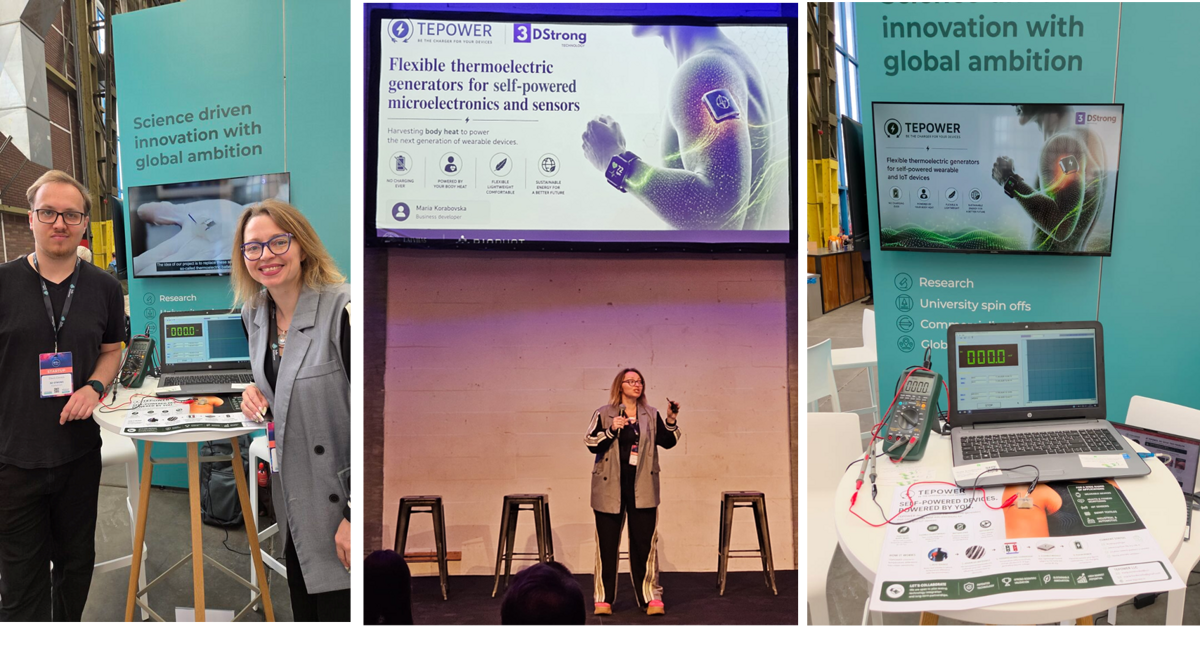
TEPOWER at Deep Tech Atelier 2026
TEPOWER participated in in Riga, one of the leading deep-tech events in Europe bringing together startups, investors, researchers, and technology companies from around the world.
During the event, TEPOWER presented its flexible thermoelectric generator technology both:
🔹 at the BioPhoT Demo Zone exhibition stand
🔹 and on stage during the Startup Pitch Competition and Innovation EU session.
At TEPOWER, we are developing flexible thermoelectric generators that convert body heat and small temperature differences into continuous electricity for wearable devices, sensors, and future self-powered electronics.
Participation in Deep Tech Atelier provided a valuable opportunity to present our technology to international investors, industry representatives, and potential collaboration partners, while also receiving valuable feedback and building new connections within the European deep-tech ecosystem.
We would like to thank the organizers of Deep Tech Atelier and the BioPhoT team for the opportunity to participate in this important event and showcase our technology.
The growing interest in battery-free and self-powered technologies confirms the strong future potential of sustainable energy harvesting solutions.
TEPOWER at Sensors Converge 2026
The TEPOWER team participated in Sensors Converge 2026 in Santa Clara, USA, from May 6–7, 2026 — one of the leading global events for sensors, IoT, embedded systems, and wearable technologies.
During the event, we explored the latest developments in low-power electronics, wearable devices, energy harvesting, and autonomous sensor systems. The exhibition provided valuable insights into current industry trends and future market needs for self-powered electronics.
We met with industry representatives, technology developers, and potential partners from the sensor, medical device, semiconductor, and wearable technology sectors to discuss possible applications of TEPOWER flexible thermoelectric generators in next-generation devices.
A particularly strong interest came from medical sensor and wearable health monitoring companies. One of the major challenges in the industry today is battery lifetime and maintenance, as many medical sensors require battery replacement. TEPOWER’s flexible thermoelectric technology, which converts body heat into electricity, attracted attention as a promising solution for self-powered and long-lasting wearable systems.
The event allowed TEPOWER to expand its international network, identify potential pilot partners, and gain valuable market insights that will support the project’s further development and transition from TRL 4 to TRL 5.

TEPOWER Participates in Life Science Business Development Masterclass
Marija Korabovska, Business Developer of the TEPOWER project, participated in the Life Science Project Business Development Workshop with Marco Rüedi, organized within the BioPhoT innovation platform.
The workshop brought together research teams developing innovative technologies and provided practical guidance on how to move scientific projects toward commercialization. Participants explored market validation, business strategy, value proposition development, and pathways for attracting industry partners and investors.
The insights gained during the workshop will support the next development stages of TEPOWER as we continue progressing from research to real-world applications.

TEPOWER at TechChill 2026: Insights from the Baltic Startup Ecosystem
We attended TechChill 2026 (https://www.techchill.co/), one of the leading startup and innovation events in the Baltics.
During the event, we participated in various sessions and presentations, gaining insights into current technology trends and startup ecosystem developments. We did not identify direct competitors in the field of flexible thermoelectric generators for self-powered sensors.
We also attended the Baltic Startup Policy Forum, where future plans and strategic directions for startup development in the Baltic region were discussed.
Overall, TechChill provided valuable insights and context for the further development of the TEPOWER project.

TEPOWER at SMART ENERGY WEEK 2026: Market Insights and New Collaboration Opportunities
March 17–19, 2026 | Tokyo Big Sight, Japan
The TEPOWER project participated in SMART ENERGY WEEK 2026, one of the world’s leading international exhibitions for energy technologies, held at Tokyo Big Sight, Japan.
SMART ENERGY WEEK brings together multiple specialized exhibitions, including H2 & FC Expo (Hydrogen & Fuel Cells), PV Expo (Photovoltaics), Battery Japan, Smart Grid Expo, as well as wind, biomass, and other sustainable energy solutions. The event provided a comprehensive overview of the latest innovations, technologies, and market trends across the global energy sector.
Objectives and Activities
The main objective of participation was to conduct targeted market research in the fields of energy harvesting, sensors, and low-power electronics, with a focus on identifying potential applications and positioning of TEPOWER’s flexible thermoelectric generator technology.
During the exhibition, the TEPOWER team:
- analyzed state-of-the-art solutions in energy harvesting and materials,
- reviewed competing technologies and alternative power solutions,
- evaluated industry requirements related to energy density, integration, and materials,
- explored emerging trends in wearable electronics, IoT, and sensor systems
Industry Engagement and Partnerships
A key outcome of the visit was the identification of potential industrial partners and the initiation of first-stage discussions with companies active in nanomaterials, electronics, and energy technologies.
Meetings and exchanges were held with organizations including:
- OCSiAl
- CHASM Advanced Materials
- Murata Manufacturing
- as well as other companies from Japan and Europe working in flexible electronics and sensor technologies.
These discussions focused on:
- integration of TEPOWER technology into wearable devices,
- applications in industrial sensors and autonomous IoT systems,
- potential collaboration in pilot projects and joint development.
Key Outcomes
Participation in SMART ENERGY WEEK 2026 resulted in:
- expanded international network of industry contacts,
- identification of promising collaboration opportunities,
- improved understanding of market needs and competing technologies,
- validation of potential application areas for TEPOWER technology.
Next Steps
The knowledge, contacts, and insights gained during the event will support the further development of the TEPOWER project, particularly in advancing the technology from TRL 4 toward TRL 5, with a focus on real-world validation and industrial collaboration.
TEPOWER — Be the Charger.

TEPOWER Presented Battery-Free Power Technology at BioPhoT Industry Day
The TEPOWER project participated in the BioPhoT Industry Day, held on 26 January, where the team presented its latest developments in flexible thermoelectric generators for self-powered microelectronics and sensors.
During the event, TEPOWER showcased its technology concept, which enables battery-free powering of ultra-low-power devices by converting human body heat into electrical energy. The presentation highlighted the potential of this approach for wearable sensors, medical patches, and autonomous sensing applications, where battery lifetime and maintenance remain key challenges.
The BioPhoT Industry Day brought together researchers, industry representatives, and innovation stakeholders, providing an excellent platform to exchange ideas, discuss real-world needs, and explore opportunities for collaboration. TEPOWER used this opportunity to gather feedback from industry experts and to better understand market expectations for self-powered sensor technologies.
Participation in the event is part of TEPOWER’s ongoing efforts to connect research with industry, validate application scenarios, and identify potential partners interested in testing battery-free power solutions in real environments.
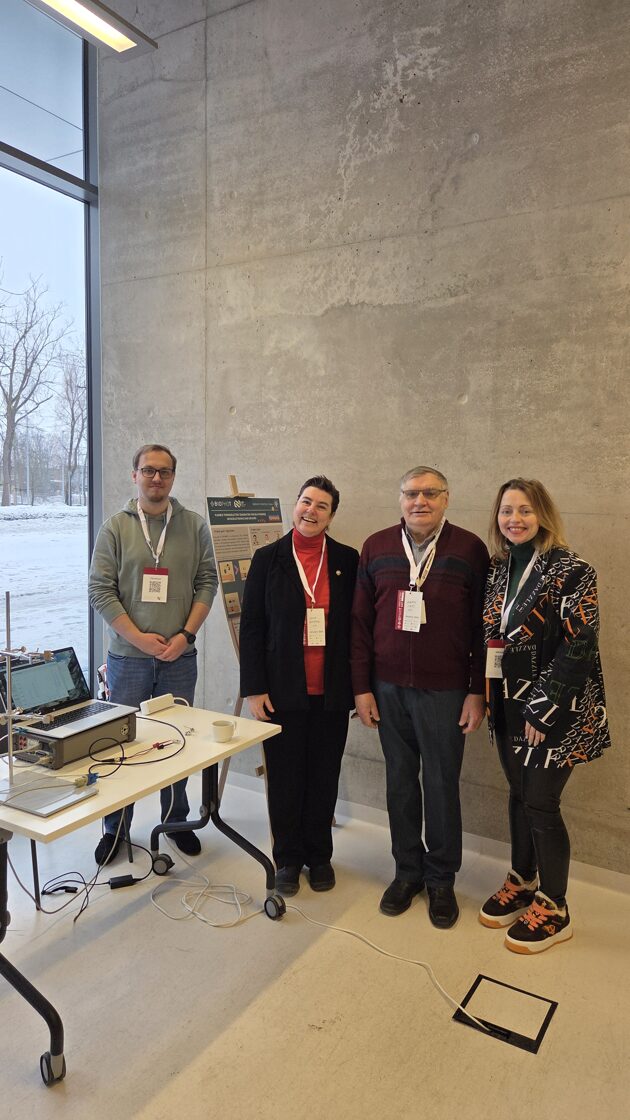
TEPOWER Completes First Prototype and Seeks Industrial Partners for Real-World Testing
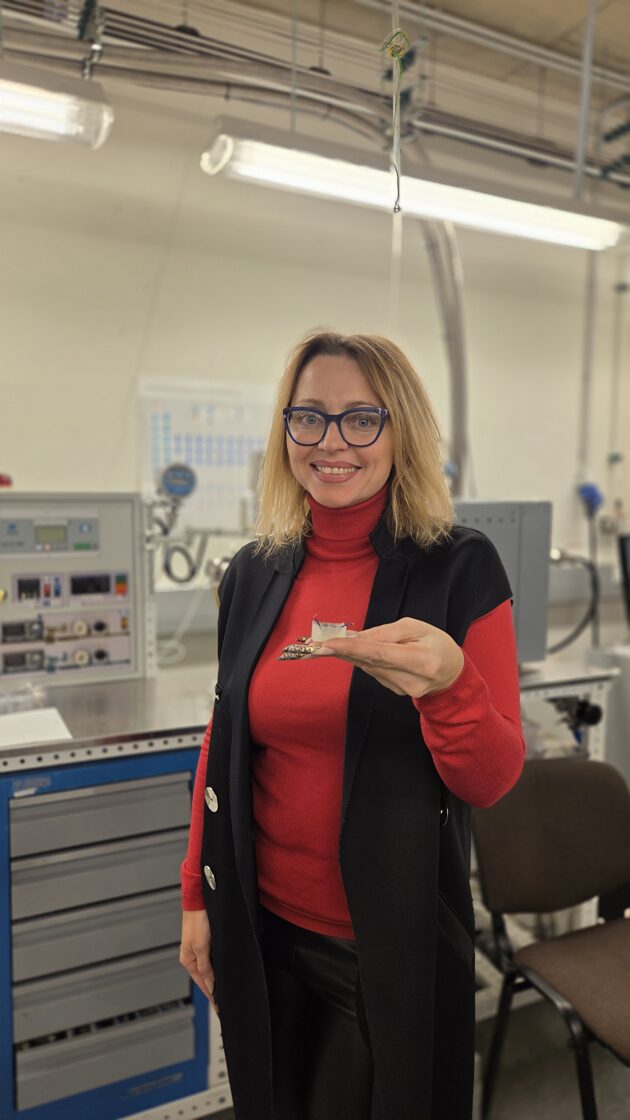
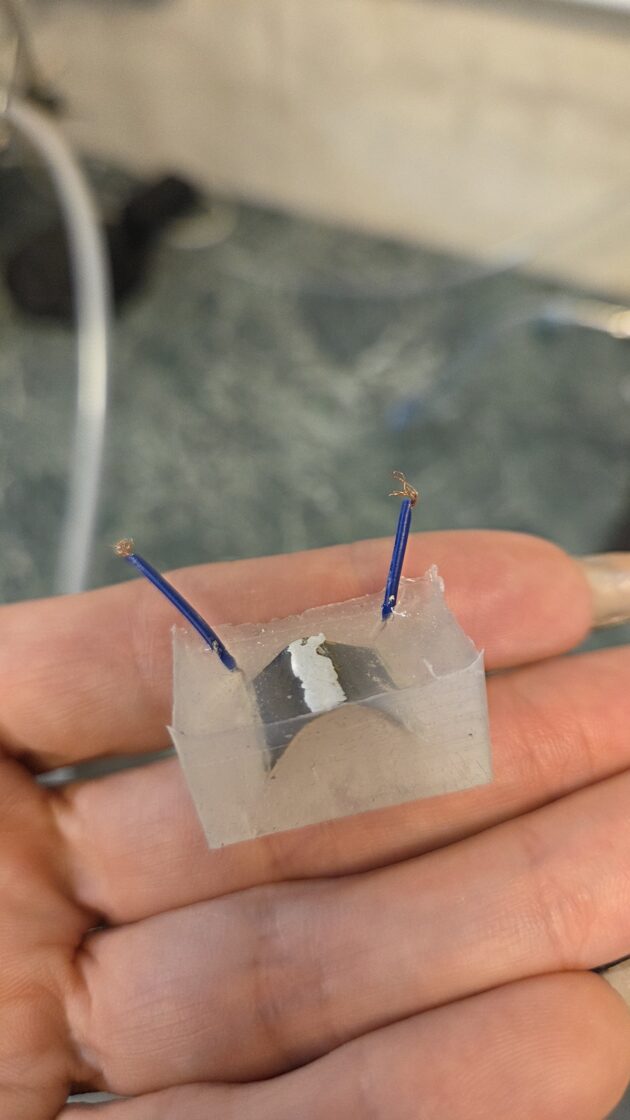
We are pleased to announce that the TEPOWER project has successfully completed its first functional prototype of a flexible thermoelectric generator designed to power microelectronics using human body heat.
The prototype demonstrates the feasibility of battery-free operation for ultra-low-power devices by harvesting energy from the natural temperature difference between the human body and the surrounding environment. This milestone marks an important step toward self-powered wearable electronics.
Following this achievement, TEPOWER is now seeking industrial partners to collaborate on real-world testing and validation. In particular, we are looking for partners working with photoplethysmography (PPG) sensors or related wearable health technologies to integrate and test the TEPOWER generator with commercial PPG devices.
Partner collaboration will focus on:
-
integration of the TEPOWER generator with existing PPG hardware,
-
testing under realistic use conditions,
-
evaluation of performance, reliability, and user comfort,
-
exploration of future product development and scaling opportunities.
This collaboration phase is essential for advancing the technology beyond laboratory validation and preparing it for real-world applications in healthcare, wearables, and autonomous sensing.
Organizations interested in testing battery-free power solutions for wearable sensors are invited to contact the TEPOWER team.
TEPOWER — Be the Charger.
 |  |
“Ilgtermiņa valsts pētījumu programmas projekts “Biomedicīnas un fotonikas pētniecības platforma inovatīvu produktu radīšanai”
Nr. IVPP-EM-Inovācija-2024/1-0002 “Ilgtermiņa valsts pētījumu programmas projekts “Biomedicīnas un fotonikas pētniecības platforma inovatīvu produktu radīšanai”, granta Nr. OSI_PIP_BioPhoT-2025/1-0044