
TEPOWER projekts Latvijas Televīzijas sižetā no BioPhoT Industry Day
26. janvārī notikušā BioPhoT Industry Day pasākuma laikā TEPOWER projekts tika iekļauts Latvijas Televīzijas reportāžā, kurā tika atspoguļoti Latvijā attīstīti inovatīvi risinājumi biofotonikas un augsto tehnoloģiju jomā.
Televīzijas sižetā tika izcelti projekti, kas apvieno zinātnisko pētniecību ar praktisku pielietojumu, tostarp TEPOWER izstrādātā tehnoloģija – elastīgi termoelektriskie ģeneratori, kas ļauj darbināt mikroelektroniku un sensorus, izmantojot cilvēka ķermeņa siltumu, bez baterijām.
Dalība BioPhoT Industry Day un projekta atspoguļojums Latvijas Televīzijā apliecina pieaugošu sabiedrības un industrijas interesi par ilgtspējīgiem, pašpietiekamiem enerģijas risinājumiem valkājamajās tehnoloģijās un sensoru sistēmās.
TEPOWER komanda turpina aktīvu dialogu ar industrijas pārstāvjiem, lai veicinātu tehnoloģijas attīstību, testēšanu reālos apstākļos un turpmāku ceļu uz praktisku pielietojumu.
📺 Latvijas Televīzijas sižets:
TEPOWER Presented Battery-Free Power Technology at BioPhoT Industry Day
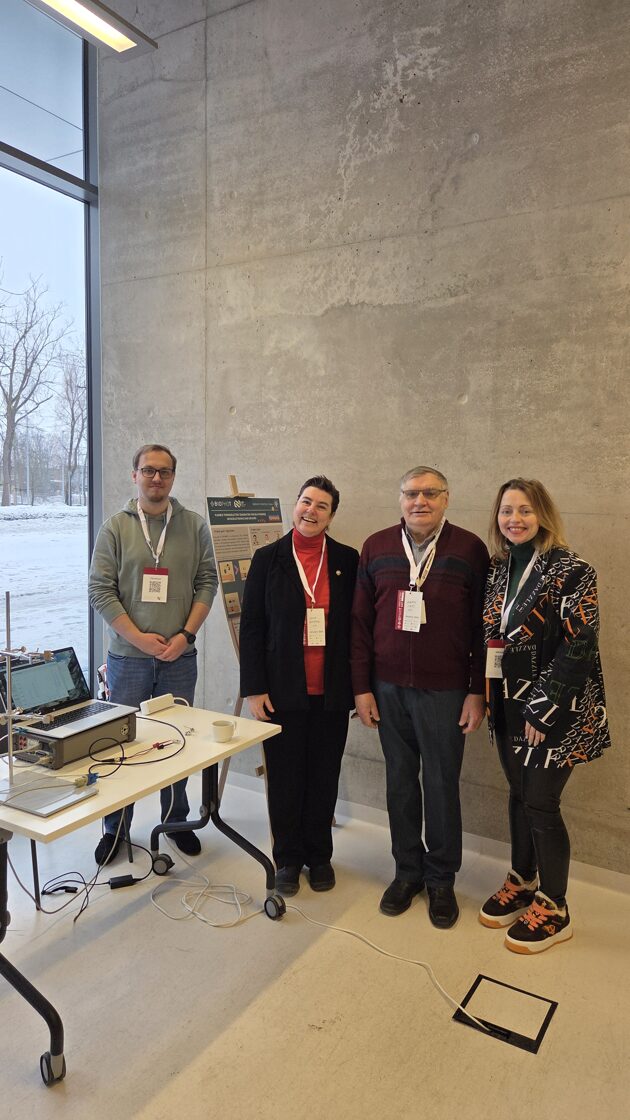
The TEPOWER project participated in the BioPhoT Industry Day, held on 26 January, where the team presented its latest developments in flexible thermoelectric generators for self-powered microelectronics and sensors.
During the event, TEPOWER showcased its technology concept, which enables battery-free powering of ultra-low-power devices by converting human body heat into electrical energy. The presentation highlighted the potential of this approach for wearable sensors, medical patches, and autonomous sensing applications, where battery lifetime and maintenance remain key challenges.
The BioPhoT Industry Day brought together researchers, industry representatives, and innovation stakeholders, providing an excellent platform to exchange ideas, discuss real-world needs, and explore opportunities for collaboration. TEPOWER used this opportunity to gather feedback from industry experts and to better understand market expectations for self-powered sensor technologies.
Participation in the event is part of TEPOWER’s ongoing efforts to connect research with industry, validate application scenarios, and identify potential partners interested in testing battery-free power solutions in real environments.
TEPOWER Completes First Prototype and Seeks Industrial Partners for Real-World Testing
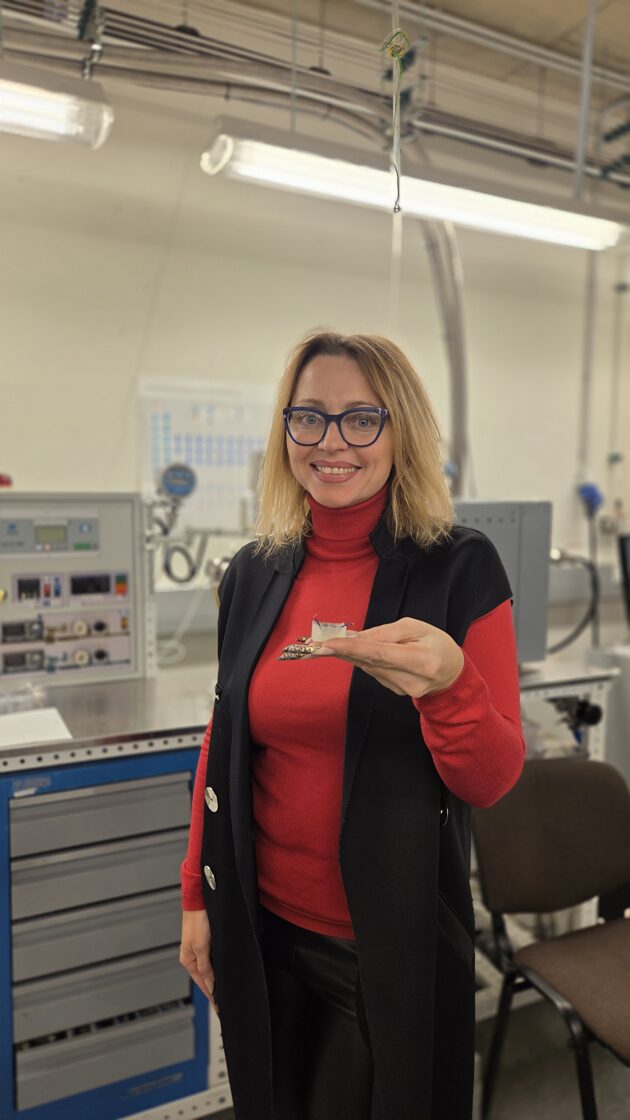
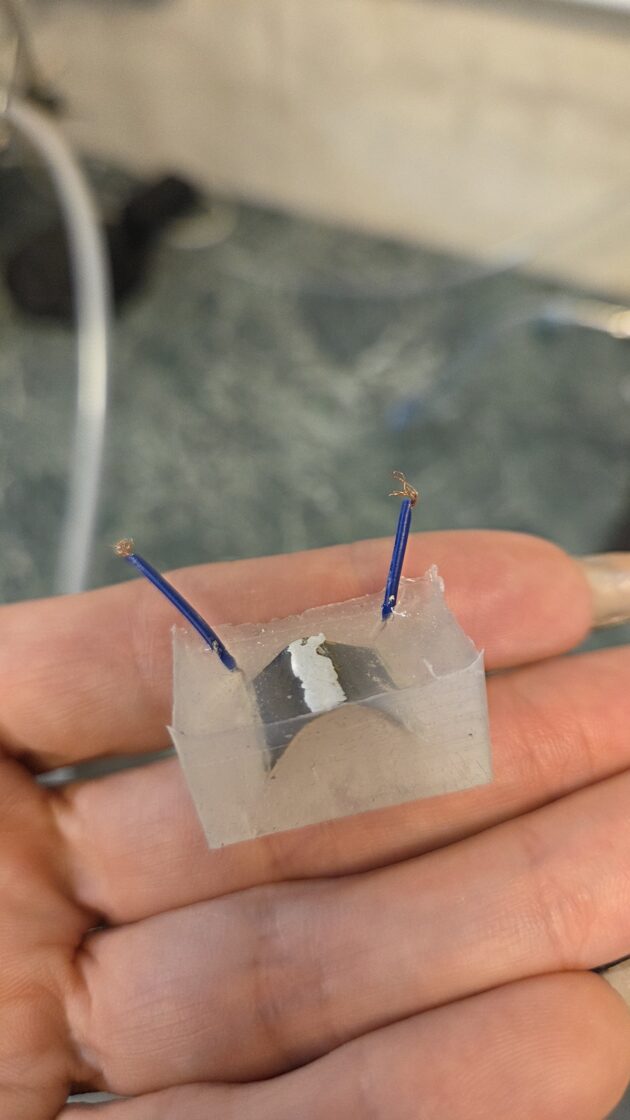
We are pleased to announce that the TEPOWER project has successfully completed its first functional prototype of a flexible thermoelectric generator designed to power microelectronics using human body heat.
The prototype demonstrates the feasibility of battery-free operation for ultra-low-power devices by harvesting energy from the natural temperature difference between the human body and the surrounding environment. This milestone marks an important step toward self-powered wearable electronics.
Following this achievement, TEPOWER is now seeking industrial partners to collaborate on real-world testing and validation. In particular, we are looking for partners working with photoplethysmography (PPG) sensors or related wearable health technologies to integrate and test the TEPOWER generator with commercial PPG devices.
Partner collaboration will focus on:
-
integration of the TEPOWER generator with existing PPG hardware,
-
testing under realistic use conditions,
-
evaluation of performance, reliability, and user comfort,
-
exploration of future product development and scaling opportunities.
This collaboration phase is essential for advancing the technology beyond laboratory validation and preparing it for real-world applications in healthcare, wearables, and autonomous sensing.
Organizations interested in testing battery-free power solutions for wearable sensors are invited to contact the TEPOWER team.
TEPOWER — Be the Charger.
| |
TEPOWER Advances Battery-Free Power for Wearable Sensors
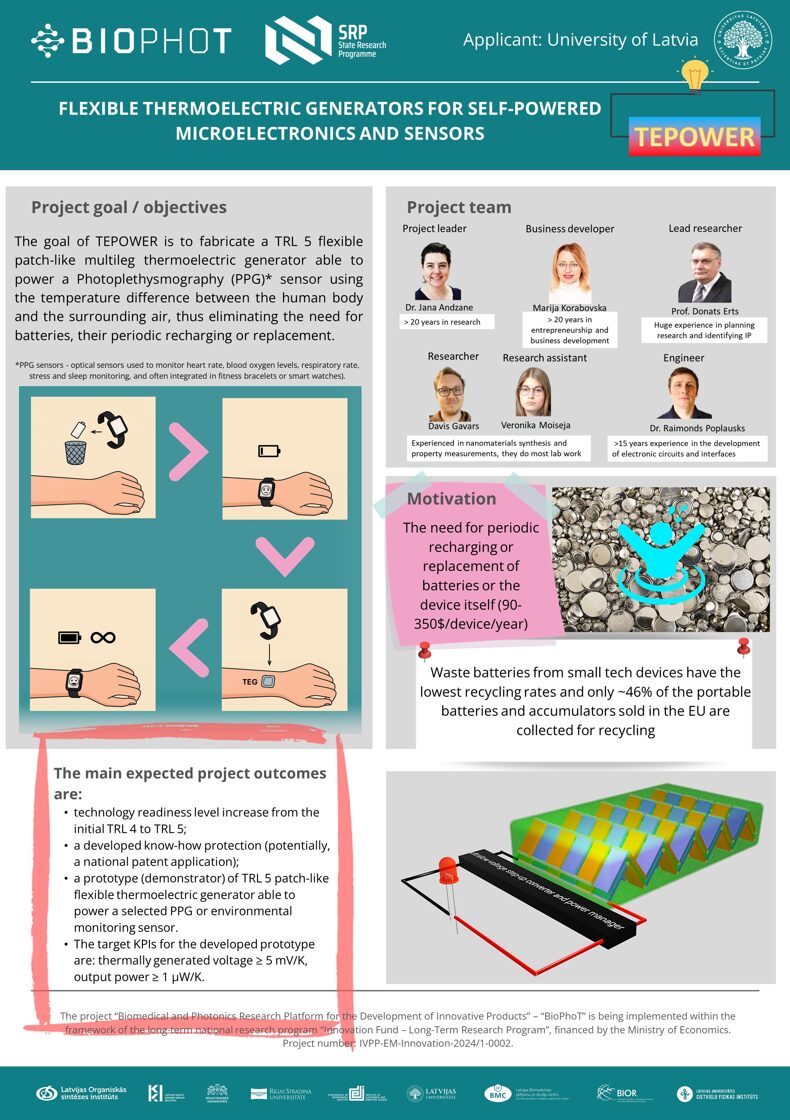
The TEPOWER project is developing a new generation of flexible thermoelectric generators designed to power microelectronics and sensors using human body heat, eliminating the need for batteries and external charging.
Led by researchers at the University of Latvia, TEPOWER focuses on creating patch-like, flexible power modules capable of supplying energy to ultra-low-power devices such as photoplethysmography (PPG) sensors used in health and wellness monitoring. These sensors are commonly found in smartwatches, fitness trackers, and medical patches, where battery lifetime and maintenance remain major limitations.
The project’s goal is to fabricate a Technology Readiness Level (TRL) 5 demonstrator that converts the temperature difference between the human body and surrounding air into usable electrical energy. By doing so, TEPOWER aims to enable continuous, self-powered operation of wearable and sensing devices—without battery replacement or recharging.
A key motivation behind the project is the growing environmental and economic cost of batteries. Small electronic devices often require frequent battery replacement, with annual costs reaching 90–350 USD per device. At the same time, waste batteries from small electronics have some of the lowest recycling rates, with only about 46% of portable batteries collected for recycling in the EU. TEPOWER addresses this challenge by offering a sustainable, battery-free alternative.
The interdisciplinary project team brings together expertise in advanced materials, electronics, and business development, combining scientific research with real-world application potential. Alongside technology development, the project also focuses on know-how protection, prototype validation, and preparation for further technology scale-up.
The main expected outcomes of TEPOWER include:
-
advancing the technology from TRL 4 to TRL 5,
-
developing a functional patch-like thermoelectric generator prototype,
-
demonstrating battery-free powering of a PPG or environmental sensor,
-
laying the groundwork for future commercialization and partnerships.
By harvesting energy directly from the human body, TEPOWER contributes to the vision of self-powered electronics that are more sustainable, user-friendly, and always on.
TEPOWER — Be the Charger.
“Ilgtermiņa valsts pētījumu programmas projekts “Biomedicīnas un fotonikas pētniecības platforma inovatīvu produktu radīšanai”
Nr. IVPP-EM-Inovācija-2024/1-0002 “Ilgtermiņa valsts pētījumu programmas projekts “Biomedicīnas un fotonikas pētniecības platforma inovatīvu produktu radīšanai”, granta Nr. OSI_PIP_BioPhoT-2025/1-0044

Latvian Scientists Turn Body Heat into Electricity Using Nanocomposites
Popularzinatniskais_raksts_Ilustreta_Zinatne-1.pdf
Researchers in Latvia have developed innovative nanocomposite materials capable of converting human body heat into electrical energy, opening new possibilities for self-powered microelectronics and sensors.
The technology is based on flexible thermoelectric materials that generate electricity from the natural temperature difference between the human body and the surrounding environment. Unlike traditional rigid thermoelectric materials, these nanocomposites remain lightweight, flexible, and suitable for wearable applications.
The core of the innovation lies in combining carbon nanotube networks with bismuth- and antimony-based thermoelectric nanostructures, encapsulated in biocompatible polymers. This architecture allows efficient heat-to-electricity conversion while maintaining mechanical durability and comfort for skin contact.
According to the researchers, the human body continuously releases thermal energy—up to around 100 watts—most of which is normally lost to the environment. By harvesting even a small fraction of this energy, the developed technology can power low-energy devices such as wearable health sensors, environmental monitoring systems, and autonomous IoT devices, without the need for batteries.
One of the key advantages of the technology is its ability to operate in darkness, indoors, and in cold environments, where solar energy is unavailable. This makes thermoelectric energy harvesting especially attractive for medical wearables and long-term monitoring applications.
The research team is currently testing prototype flexible thermoelectric generators, including patch-like devices designed to be worn on the body. These prototypes demonstrate stable performance under real-life conditions, including bending and continuous wear.
The development represents an important step toward a battery-free future, reducing electronic waste and dependence on critical raw materials used in conventional batteries.
TEPOWER builds on this scientific foundation to bring the technology closer to real-world applications in wearable electronics and self-powered sensor systems.